

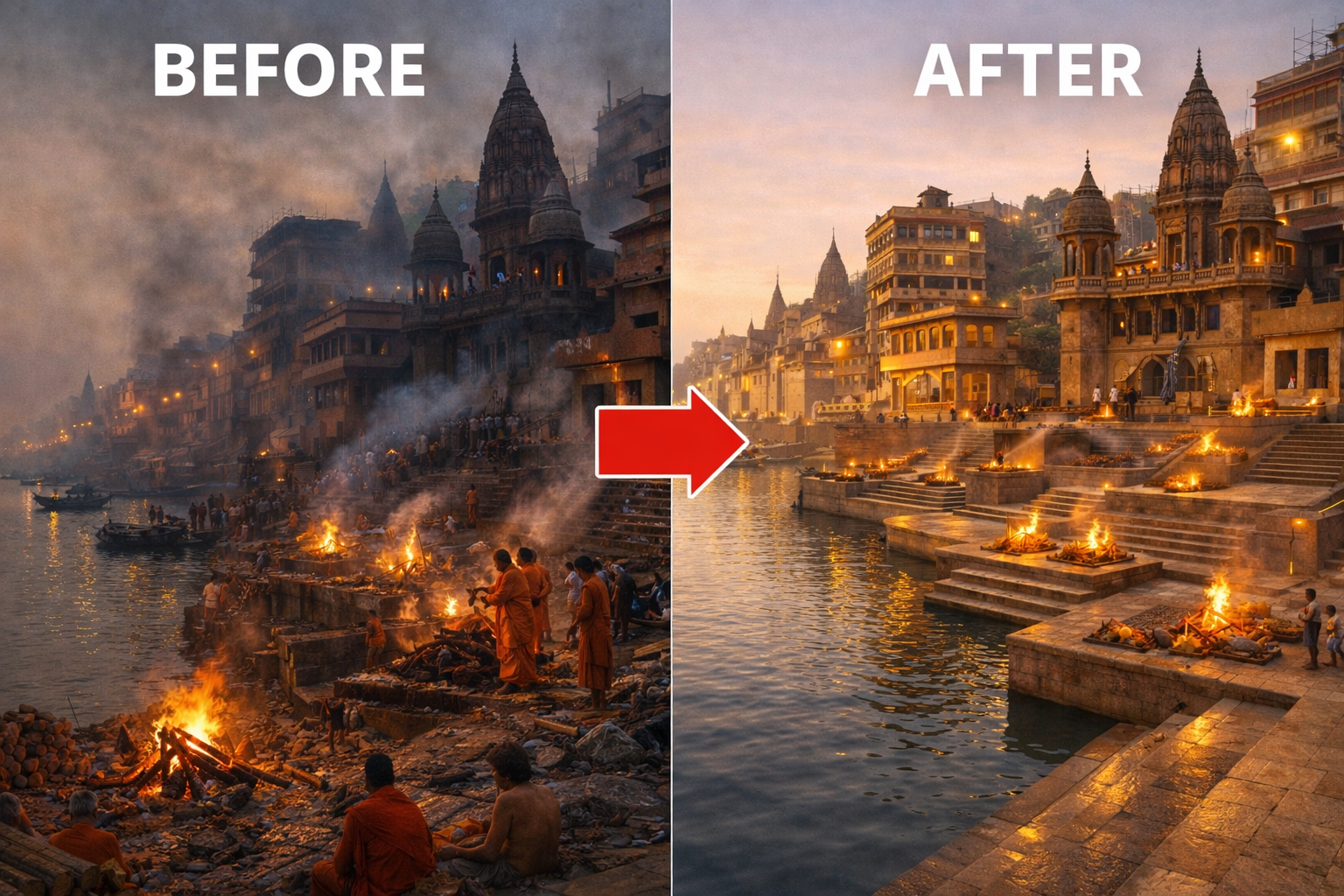
The Manikarnika Ghat reconstruction in Varanasi has become one of the most emotionally charged and widely debated heritage projects in India today. For centuries, Manikarnika Ghat, the sacred cremation ghat on the banks of the River Ganga, has symbolised the Hindu belief that death at this holy site leads directly to moksha, or liberation from the cycle of rebirth.
Now, as bulldozers, engineers, and planners enter this ancient cremation ground, questions arise:
•Is development necessary?
•Is heritage being protected?
•Or is something irreplaceable being lost?
The Manikarnika Ghat redevelopment project aims to modernise facilities, reduce pollution, improve safety, and manage growing crowds. At the same time, it has triggered controversies, protests, and intense debate across political, religious, and cultural circles.
This is the most detailed, fact-based explanation of what the Manikarnika Ghat reconstruction really means.
Manikarnika Ghat Reconstruction Project: Why Redevelopment Was Needed
Manikarnika Ghat is not just a religious site—it is one of the busiest cremation grounds in the world. Every day, hundreds of funerals take place here, often under extreme conditions.
For years, the ghat faced serious challenges:
•Unsafe and crumbling platforms
•Overcrowding during peak hours
•Lack of toilets and drinking water
•Smoke pollution affecting workers and locals
•Flood damage during monsoon
Authorities argued that without intervention, the ghat would become dangerous, unhygienic, and environmentally harmful. This led to the planning of a large-scale Manikarnika Ghat reconstruction project under Varanasi’s broader urban renewal vision.
What Exactly Is Being Built at Manikarnika Ghat
New Cremation Platforms Under Manikarnika Ghat Redevelopment
One of the most significant changes is the construction of additional cremation platforms. The plan includes:
•Nearly 18 new organised pyre spaces
•Separate upper and lower cremation zones
•Stronger stone flooring to prevent accidents
•Improved drainage systems
These changes are expected to reduce waiting time for families and bring order to a space that often witnessed chaos.
Modern Facilities for Families Performing Last Rites
The Manikarnika Ghat modernisation plan introduces basic facilities that were absent for centuries:
•Clean public toilets
•Drinking water points
•Shaded waiting areas
•Seating for elderly mourners
•Designated wood storage zones
Officials stress that these facilities are meant to provide human dignity, not luxury.
Improved Access Routes and Crowd Management
Narrow lanes leading to Manikarnika Ghat often caused delays and stampede-like situations. The reconstruction includes:
•Wider pathways.
•Smoother access from nearby ghats.
•Clear routes for carrying bodies
This is expected to improve safety and reduce distress during funerals.
Environmental Goals of Manikarnika Ghat Reconstruction
Eco-Friendly Cremation Measures in Varanasi
Pollution has long been associated with Manikarnika Ghat. The new plan focuses on:
•Better wood management to reduce excess burning.
•Controlled cremation areas to limit smoke spread.
•Organised ash collection instead of river dumping.
While traditional cremation rituals remain unchanged, authorities aim to reduce the environmental footprint of the ghat.
Flood-Resistant Design for Year-Round Use
Every monsoon, rising Ganga waters flood parts of the ghat. The new design includes:
•Elevated cremation platforms.
•Reinforced structures.
•Water-resistant materials.
This ensures cremations can continue safely even during floods.
Heritage Restoration Around Manikarnika Ghat
The project also includes restoration of surrounding religious landmarks such as:
•Ratneshwar Mahadev Temple.
•Tarkeshwar Temple.
•Chakra Pushkarani Kund.
•Dattatreya Paduka.
Authorities claim that idols, ancient stones, and carvings removed during construction are being preserved and will be reinstalled.
Who Is Funding the Manikarnika Ghat Reconstruction
The project is funded through:
•Government development funds.
•Local municipal resources.
•Corporate Social Responsibility (CSR) contributions.
Private corporate groups have supported the project financially, while the district administration manages execution.
The redevelopment is part of a larger vision that includes the Kashi Vishwanath Corridor, which has already transformed access to nearby temples.
Manikarnika Ghat Reconstruction Controversy Explained
Heritage Damage Allegations
The controversy erupted when claims surfaced that:
•Ancient structures were demolished
•A statue linked to Queen Ahilyabai Holkar was damaged.
•The spiritual character of the ghat was being altered.
Opposition leaders and historians accused authorities of ignoring heritage laws.
Official Clarification and FIRs Over Fake Images
The administration denied the allegations, stating:
•Only unsafe structures were removed.
•Idols and heritage elements were safely stored.
•No temple was destroyed.
FIRs were later filed against individuals accused of spreading misleading or AI-generated images of the site.
Reaction of Priests, Workers, and Local Residents
Local opinion remains divided:
•Some cremation workers welcome safer platforms.
•Priests fear loss of ancient atmosphere.
•Residents worry about over-commercialisation.
Despite the debate, cremations have continued uninterrupted throughout construction.
What Manikarnika Ghat Reconstruction Means for Pilgrims
For pilgrims and families, the changes promise:
•Cleaner surroundings.
•Better organisation during rituals.
•Safer conditions for elderly visitors.
•Reduced chaos during peak periods.
At the same time, many devotees hope the ghat’s raw spiritual power is preserved.
Faith vs Development: The Real Challenge at Manikarnika Ghat
The reconstruction of Manikarnika Ghat reflects a deeper national question:Can India modernise sacred spaces without losing their soul?
Supporters see dignity, safety, and sustainability.Critics see erosion of centuries-old tradition.
The final outcome will depend on how respectfully the project is completed.
Conclusion: A Historic Transformation Watched by the World
The Manikarnika Ghat reconstruction in Varanasi is more than an infrastructure project—it is a transformation of a sacred gateway between life and death.
If executed with transparency and sensitivity, it could become a global example of heritage-sensitive development. If mishandled, it risks losing something no amount of concrete can replace.
For now, the eternal flames of Manikarnika continue to burn—watching history change around them.